

Le traitement de votre maladie
Le traitement donc est basé principalement sur un régime spécifique, éventuellement associé à des traitements médicamenteux (cofacteurs ou épurateurs).
Buts du traitement
Les buts à atteindre sont identiques quelle que soit la maladie :
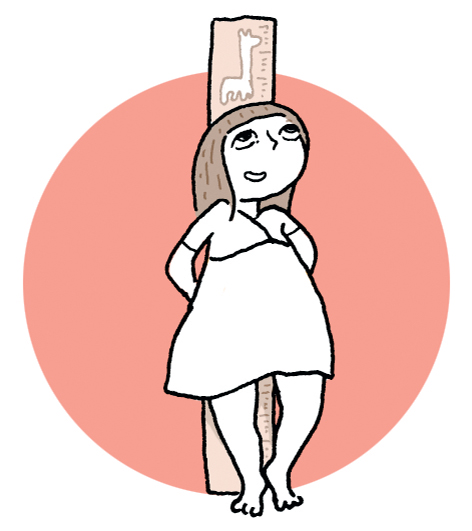
- Assurer une croissance normale en poids, taille, périmètre crânien et un bon état nutritionnel ;
- Obtenir des acquisitions psychomotrices normales ;
- Avoir un bon équilibre métabolique dans la continuité ;
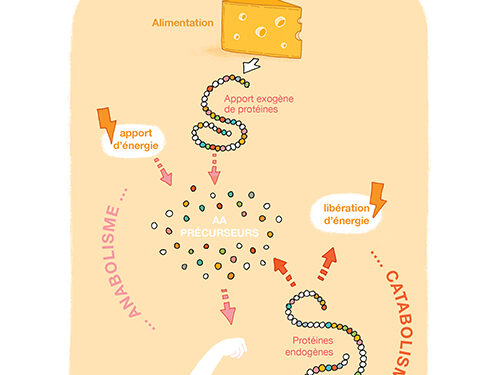
- Prévenir les décompensations aiguës (inexistantes pour la phénylcétonurie), en évitant toute période de catabolisme (dégradation de ses propres protéines et libération des Acides Aminés).
Principe du traitement diététique
Le principe du traitement diététique est de faire un régime limité dans l’acide aminéLes acides aminés sont des molécules qui, combinées entre elles, forment les protéines. 20 acides aminés entrent dans la composition des protéines du corps humain. Parmi eux, 8 sont indispensables (notre organisme ne peut les synthétiser, il faut les apporter par l’alimentation) : isoleucine, leucine, lysine, méthionine, phénylalanine, thréonine, tryptophane, valine.
L’arginine et l’histidine sont semi-indispensables. En effet, seuls les nourrissons ont besoin d’en apporter de leur nourriture.
La cystéine, glycine et tyrosine peuvent être indispensables pour certaines populations. More dont le métabolismeLe métabolisme est l’ensemble des réactions chimiques d’un organisme vivant. Il comprend également les échanges d’énergie associés. More est défaillant, tout en apportant en quantités suffisantes les autres nutrimentsUn nutriment est une substance apportée par l'alimentation et qui assure le développement et l'entretien de l'organisme. Les protéines, les glucides, les lipides, les vitamines, les sels minéraux et les oligoéléments sont des nutriments. More, c’est-à-dire les autres acides aminés, les glucides et les lipides, les vitaminesUne vitamine est une substance organique active, vitale, indispensable en infime quantité à la croissance et au bon fonctionnement de l'organisme, qui ne peut en effectuer lui-même la synthèse. More et les minérauxUn minéral est un élément ou composé naturel inorganique. Dans l'organisme humain, les principaux sont : la calcium, le sodium, le magnésium, le phosphore, le potassium… More. Ce traitement va donc reposer sur :
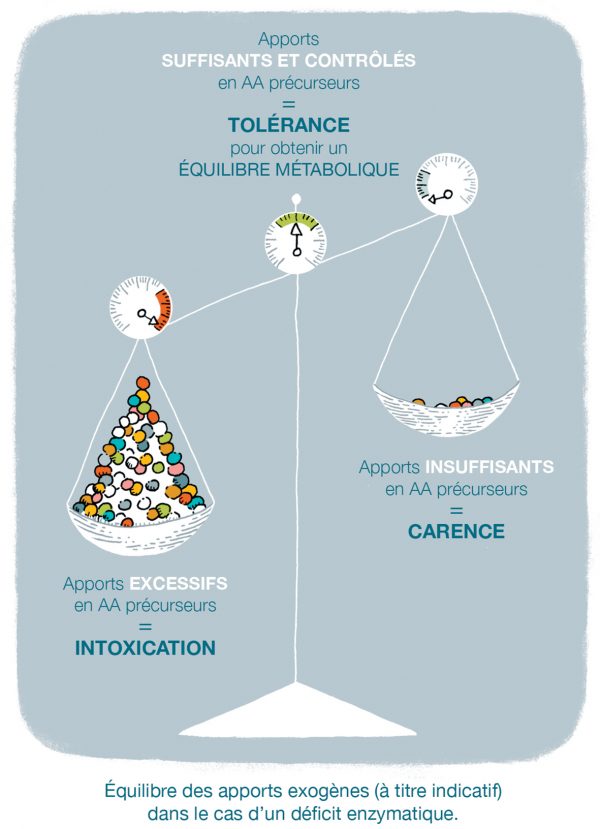
- Une restriction drastique de l’apport protéique alimentaire (et donc des acides aminés exogènes) pour ne pas entraîner d’intoxication. C’est une restriction et non une suppression totale des protéines car les aliments naturels doivent apporter l’acide aminéLes acides aminés sont des molécules qui, combinées entre elles, forment les protéines. 20 acides aminés entrent dans la composition des protéines du corps humain. Parmi eux, 8 sont indispensables (notre organisme ne peut les synthétiser, il faut les apporter par l’alimentation) : isoleucine, leucine, lysine, méthionine, phénylalanine, thréonine, tryptophane, valine.
L’arginine et l’histidine sont semi-indispensables. En effet, seuls les nourrissons ont besoin d’en apporter de leur nourriture.
La cystéine, glycine et tyrosine peuvent être indispensables pour certaines populations. More limité en quantité nécessaire pour couvrir les besoins minimums liés à la croissance et au renouvellement des protéines du corps. Un régime totalement dépourvu de protéines ne permettrait pas une croissance normale, il entraînerait des carences en acides aminés précurseurs. Ces nutrimentsUn nutriment est une substance apportée par l'alimentation et qui assure le développement et l'entretien de l'organisme. Les protéines, les glucides, les lipides, les vitamines, les sels minéraux et les oligoéléments sont des nutriments. More sont indispensables car notre corps ne peut les fabriquer. Ils doivent être suffisants pour permettre une bonne croissance ; - La supplémentation d’un mélange d’acides aminés essentiels dépourvu du ou des acides aminés toxiques (selon les pathologies et selon l’état clinique) afin de couvrir le besoin dans les autres acides aminés essentiels (dont l’apport par l’alimentation se retrouve limité par la restriction protéique) et pour permettre une synthèse protéique ;
- Un apport énergétique (glucides et lipides) normal mais à rééquilibrer et/ou compenser du fait de la suppression d’un grand nombre d’aliments ;
- Un apport dans les autres nutriments non énergétiques (minérauxUn minéral est un élément ou composé naturel inorganique. Dans l'organisme humain, les principaux sont : la calcium, le sodium, le magnésium, le phosphore, le potassium… More, vitaminesUne vitamine est une substance organique active, vitale, indispensable en infime quantité à la croissance et au bon fonctionnement de l'organisme, qui ne peut en effectuer lui-même la synthèse. More, oligo-élémentsUn oligo-élément est un élément chimique présent en très faible quantité dans l'organisme, indispensable au métabolisme (ex. le fer, le magnésium). More) normal et correspondant aux besoins de votre enfant à un âge donné.
En pratique
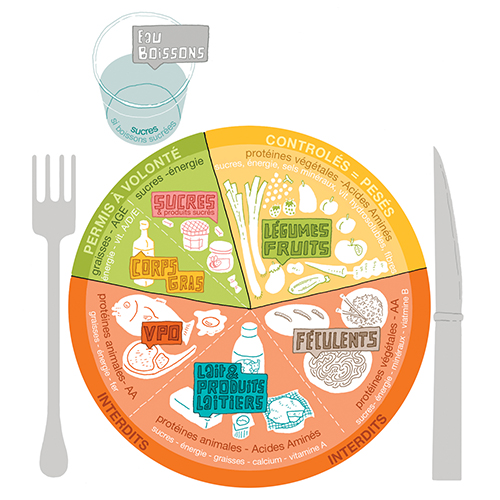
Cela implique une connaissance de la composition des aliments et un choix de ceux-ci. Il est usuel de classer les aliments en groupes. Les aliments faisant partie d’un même groupe ont les mêmes caractéristiques nutritionnelles.
Un enfant ayant un déficit enzymatique ne pourra avoir,dans son alimentation quotidienne , les aliments de tous les groupes sous peine d’une intoxication. Les aliments seront donc classés en :
-
LES ALIMENTS INTERDITS
Il s’agit de la plupart des aliments d’origine animale (viande, poisson, œuf, lait et laitages) et et de certains aliments d’origine végétale,en particulier les céréales et les aliments qui en dérivent :pain gâteaux…, car ces aliments sont riches en protéines.
Toutefois, ils sont parfois autorisés en quantités contrôlées dans certaines circonstances. Par exemple, dans les premiers mois de vie, l’apport en protéines naturelles est fait sous forme de lait. Enfin, certaines formes peu sévères de la maladie permettent parfois d’autoriser ces aliments en quantités contrôlées.
Pour certains de ces aliments, il existe des aliments artificiels de substitution qui permettent de maintenir un régime en apparence variée sans augmenter l’apport protéique. Ces aliments seront développés plus loin.
-
LES ALIMENTS CONTRÔLÉS PESÉS
Il s’agit d’aliments naturels qui vont permettre d’apporter la quantité nécessaire de l’acide aminéLes acides aminés sont des molécules qui, combinées entre elles, forment les protéines. 20 acides aminés entrent dans la composition des protéines du corps humain. Parmi eux, 8 sont indispensables (notre organisme ne peut les synthétiser, il faut les apporter par l’alimentation) : isoleucine, leucine, lysine, méthionine, phénylalanine, thréonine, tryptophane, valine.
L’arginine et l’histidine sont semi-indispensables. En effet, seuls les nourrissons ont besoin d’en apporter de leur nourriture.
La cystéine, glycine et tyrosine peuvent être indispensables pour certaines populations. More qui est contrôlé. Ces aliments sont principalement des fruits et des légumes frais. Pour que vous ayez plus de facilité à comptabiliser la quantité du ou des acides aminés ou des protéines à contrôler, un système d’équivalence a été établi selon la composition des légumes et des fruits.Des listes de légumes (en incluant les pommes de terre) et de fruits vous seront donc données, indiquant un certain poids de légumes et de fruits pour une quantité fixe de l’acide aminéLes acides aminés sont des molécules qui, combinées entre elles, forment les protéines. 20 acides aminés entrent dans la composition des protéines du corps humain. Parmi eux, 8 sont indispensables (notre organisme ne peut les synthétiser, il faut les apporter par l’alimentation) : isoleucine, leucine, lysine, méthionine, phénylalanine, thréonine, tryptophane, valine.
L’arginine et l’histidine sont semi-indispensables. En effet, seuls les nourrissons ont besoin d’en apporter de leur nourriture.
La cystéine, glycine et tyrosine peuvent être indispensables pour certaines populations. More contrôlé : cette quantité fixe est appelée PART ou EQUIVALENT. Cette quantité a été déterminée de manière arbitraire, mais est maintenant communément admise.Ainsi, pour la phénylcétonurie,1 Part = 20 mg de Phénylalanine. Par contre, il n’existe pas de consensus pour les autres maladies, et le système de Parts, exprimées en milligrammes d’un acide aminéLes acides aminés sont des molécules qui, combinées entre elles, forment les protéines. 20 acides aminés entrent dans la composition des protéines du corps humain. Parmi eux, 8 sont indispensables (notre organisme ne peut les synthétiser, il faut les apporter par l’alimentation) : isoleucine, leucine, lysine, méthionine, phénylalanine, thréonine, tryptophane, valine.
L’arginine et l’histidine sont semi-indispensables. En effet, seuls les nourrissons ont besoin d’en apporter de leur nourriture.
La cystéine, glycine et tyrosine peuvent être indispensables pour certaines populations. More ou en grammes de protéines naturelles, peut varier d’une équipe soignante à l’autre.Vous apprendrez petit à petit à « manipuler » ces parts pour obtenir des volumes correspondant à l’appétit de votre enfant tout en respectant sa tolérance.
-
LES ALIMENTS PERMIS À VOLONTÉ
Ils sont quasiment dépourvus de protéines, mais permettent un apport d’énergie sous forme de sucres et de graisses.
Les mélanges d’acides aminés : Du fait de l’interdiction de la quasi-totalité des aliments d’origine animale (car trop riches en protéines) et de la limitation de certains aliments d’origine végétale, le régime se retrouve non seulement limité dans le ou les acides aminés que l’on veut contrôler, mais également dans les autres acides aminés (dont le métabolismeLe métabolisme est l’ensemble des réactions chimiques d’un organisme vivant. Il comprend également les échanges d’énergie associés. More n’est pas déficitaire), avec un risque de carence dans ces acides aminés essentiels pouvant limiter la synthèse protéique et donc la croissance. Le besoin dans ces autres acides aminés doit donc être complété par une supplémentation en acides aminés non toxiques.
Ce supplément est donné sous forme d’un mélange spécifique d’acides aminés (en poudre ou liquide) dépourvu de l’acide aminéLes acides aminés sont des molécules qui, combinées entre elles, forment les protéines. 20 acides aminés entrent dans la composition des protéines du corps humain. Parmi eux, 8 sont indispensables (notre organisme ne peut les synthétiser, il faut les apporter par l’alimentation) : isoleucine, leucine, lysine, méthionine, phénylalanine, thréonine, tryptophane, valine.
L’arginine et l’histidine sont semi-indispensables. En effet, seuls les nourrissons ont besoin d’en apporter de leur nourriture.
La cystéine, glycine et tyrosine peuvent être indispensables pour certaines populations. More toxique, et qui de plus, apportera le plus souvent les minérauxUn minéral est un élément ou composé naturel inorganique. Dans l'organisme humain, les principaux sont : la calcium, le sodium, le magnésium, le phosphore, le potassium… More, vitaminesUne vitamine est une substance organique active, vitale, indispensable en infime quantité à la croissance et au bon fonctionnement de l'organisme, qui ne peut en effectuer lui-même la synthèse. More et oligo-élémentsUn oligo-élément est un élément chimique présent en très faible quantité dans l'organisme, indispensable au métabolisme (ex. le fer, le magnésium). More dont votre enfant a besoin. Il devra être pris chaque jour et ce, toute la vie durant. Cette supplémentation peut être discutée pour certaines pathologies. Les aliments de substitution « hypoprotidiques » : certaines sociétés fabriquent ou importent des aliments dépourvus de protéines pouvant « imiter » et/ou « remplacer » les aliments que nous consommons habituellement, mais qui sont trop riches en protéines. Ils font partie des « Aliments diététiques destinés à des fins médicales spéciales » (voir le tableau ci-dessous).Tous ces aliments sont indispensables à deux titres :
- pour leur apport énergétique,
- mais aussi pour pouvoir établir des menus à l’aspect sensiblement normal, lorsque votre enfant grandira.
Ces aliments seront introduits progressivement, comme chez tout enfant, et vous permettront ensuite de faire des recettes variées, la variété étant le gage d’une meilleure acceptation du régime et par là même, d’une plus grande réussite à long terme.
| Catégories d’aliments | Peuvent être « remplacés » par des aliments à teneur réduite en protides |
|---|---|
| Viandes, poissons, œufs | Substitut d’oeuf |
| Lait, produits laitiers | Boisson spéciale de régime hypoprotidique Dessert à boire Substitut de fromage en tranches ou sauce aromatisée au fromage |
| Féculents | Pâtes, riz, semoule, vermicelle Biscuits salés, sucrés Pains, biscottes, toasts, cracottes Farine Céréales |
| Sucre, produits sucrés | Bonbons sans gélatine « Chocolats » Barres hypoprotéinées, énergétiques Pâte à tartiner |
En pratique, le régime est un régime d’allure « végétalienne » composé principalement de fruits et de légumes pesés, complété par des aliments à teneur réduite en protides, avec, selon la pathologie, la supplémentation ou non d’un mélange d’acides aminés dépourvu du ou des acides aminés toxiques. Ce mélange contient habituellement des minérauxUn minéral est un élément ou composé naturel inorganique. Dans l'organisme humain, les principaux sont : la calcium, le sodium, le magnésium, le phosphore, le potassium… More, vitaminesUne vitamine est une substance organique active, vitale, indispensable en infime quantité à la croissance et au bon fonctionnement de l'organisme, qui ne peut en effectuer lui-même la synthèse. More, oligo-élémentsUn oligo-élément est un élément chimique présent en très faible quantité dans l'organisme, indispensable au métabolisme (ex. le fer, le magnésium). More permettant de remplacer ceux contenus dans les aliments interdits. Si ces derniers ne sont pas apportés par le régime précédent, il faudra les rajouter sous forme de médicaments.
Médicaments cofacteurs et/ou épurateurs
Des médicaments peuvent être proposés dans certaines formes de ces maladies. Les cofacteurs, habituellement des vitaminesUne vitamine est une substance organique active, vitale, indispensable en infime quantité à la croissance et au bon fonctionnement de l'organisme, qui ne peut en effectuer lui-même la synthèse. More, permettent d’augmenter l’activité résiduelle de l’enzymeUne enzyme est une protéine (dans certains cas, un ARN) qui va catalyser (accélérer) une réaction du métabolisme. More déficitaire et ainsi de diminuer le bloc enzymatique (ex : vitamine B12 dans certaines aciduries méthylmaloniques, BH4 dans la phénylcétonurie, …). Les épurateurs permettent d’accélérer l’élimination des produits toxiques accumulés (ex : carnitine dans les aciduries organiques). Le but de ces traitements est d’améliorer l’équilibre métabolique et/ou d’élargir le régime de votre enfant. Ces traitements ne sont malheureusement très efficaces que dans certaines formes rares de ces maladies (sensibles à un cofacteurComme son nom l’indique, un cofacteur intervient avec d’autres molécules (protéines, vitamines…) au cours d’une réaction. Sa présence peut être indispensable au bon déroulement du processus. More).